What springback is
Bending induces both plastic and elastic deformation. When pressure releases, the elastic part recovers — the angle opens slightly and the radius grows. Under-compensate and the finished angle runs wide.
Factors that drive springback
- Material strength: higher strength (e.g. high-tensile steel) springs back more
- Thickness & bend radius: larger radius-to-thickness ratio means more springback
- Die opening (V): opening width shifts the forming stress distribution
- Batch variation: same grade, different heat — properties still drift
Common compensation methods
- Over-bending: bend a few extra degrees to offset recovery
- Bottoming / coining: high pressure seats material to the die, cutting springback
- In-process angle measurement: measure the real angle mid-bend and auto-correct
- Crowning: compensate machine/tool deflection so long parts stay uniform end-to-end
Servo-electric vs hydraulic
Servo-electric brakes offer excellent ram repeatability; paired with angle measurement and a parameter database, springback compensation becomes a repeatable process rather than an operator feel — vital for high-mix, low-volume and high-tensile materials.
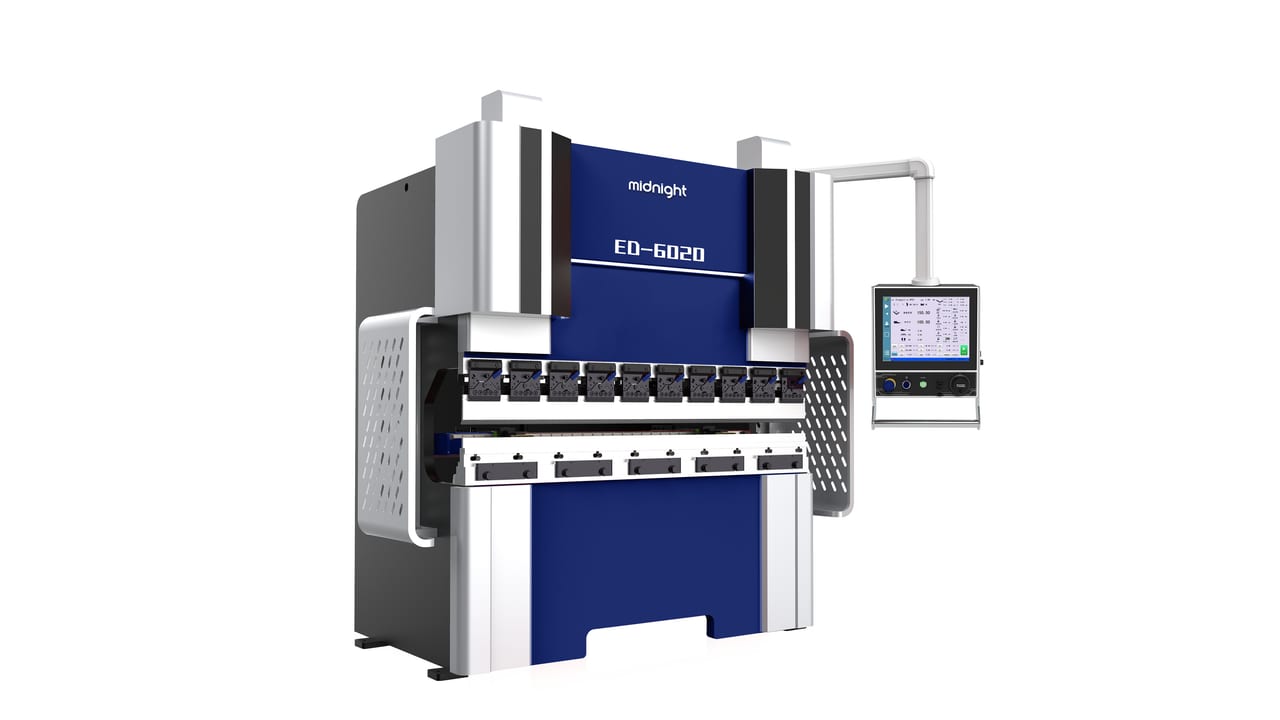
Midnight ED all-electric series combine servo drive with real-time angle feedback to hold bend angles within ±0.5° in production.